Timeless Classics
The songs that shaped generations, each given one intentional place in the rotation.
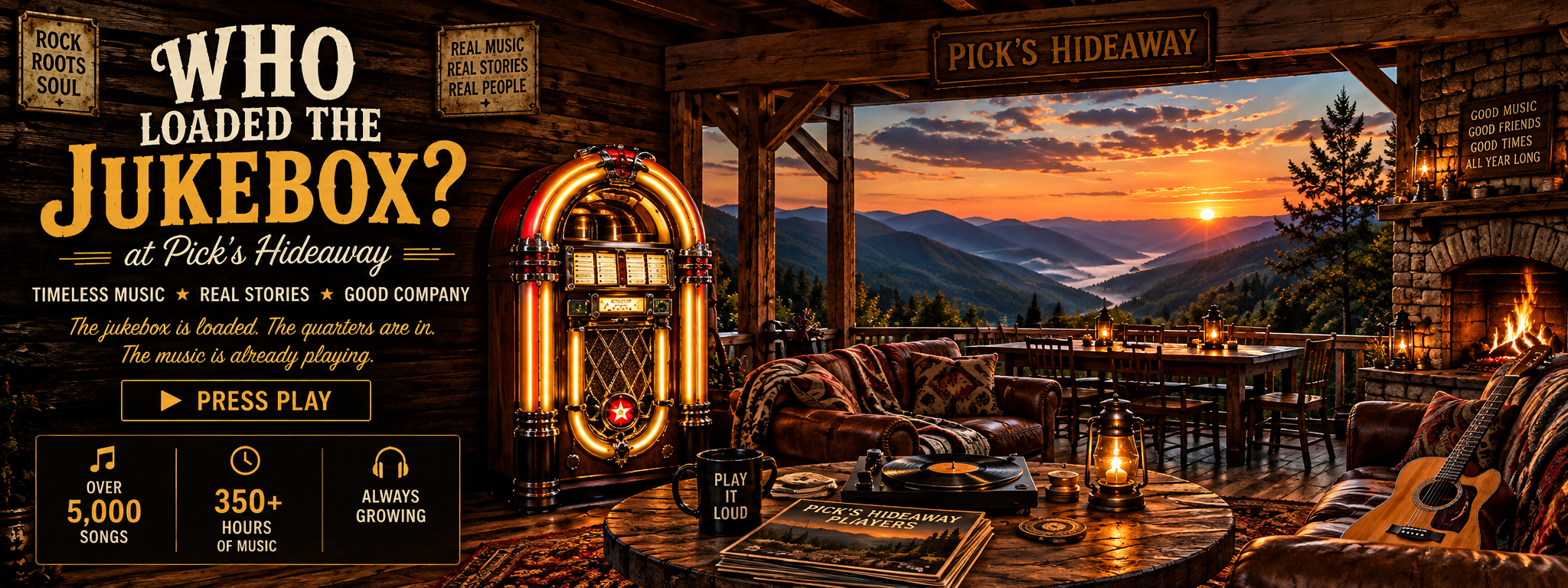
Nearly 5,000 unique songs spanning over 350 hours of music — timeless classics, forgotten favorites, deep cuts, hidden gems and tomorrow's classics. Every song earns its place, and the playlist keeps growing.
Every song has earned its place. The hits are here, but so are the album tracks, forgotten singles, live performances and new discoveries that make people stop and ask, “Who is this?”
The songs that shaped generations, each given one intentional place in the rotation.
The records that make you say, “I haven't heard this in years — and I forgot how good it was.”
Independent artists and modern songs strong enough to stand beside the legends.
Somebody had to. Might as well be someone who cared how the songs got here.
This isn't a genre playlist. It's a map of how American music actually moved — blues into country, country into bluegrass, gospel into soul, all of it into southern rock and out the other side into whatever's being played on a stage tonight.
Which is why you'll hear the same song more than once. Willie Dixon wrote “Spoonful.” Howlin' Wolf cut it. Cream plugged it in and turned it loose. All three are in here, because that's the story, and you can't tell it with one recording.
“Riders in the Sky” shows up a dozen ways — Gene Autry, Marty Robbins, Johnny Cash, the Ventures, Dick Dale. Same song. Twelve sets of hands. That's not repetition. That's the point.
There's a preference here for people who stretch out. Long versions, live takes, the night the band found something and chased it. A three-minute single is a fine thing, but so is twenty minutes of a band listening to each other, and there's room on this jukebox for both.
What there isn't room for is filler. No re-recordings pretending to be the original. No greatest-hits fakes. Every track was checked, and if it isn't the real master, it isn't here.
Nearly 5,000 unique songs. More than 350 hours. And that's just the flagship playlist.
The hits are here. So are the album cuts, the forgotten singles, the live tapes and the new records that'll be old favorites soon enough. Pull up a chair.
Explore more ways to listen.
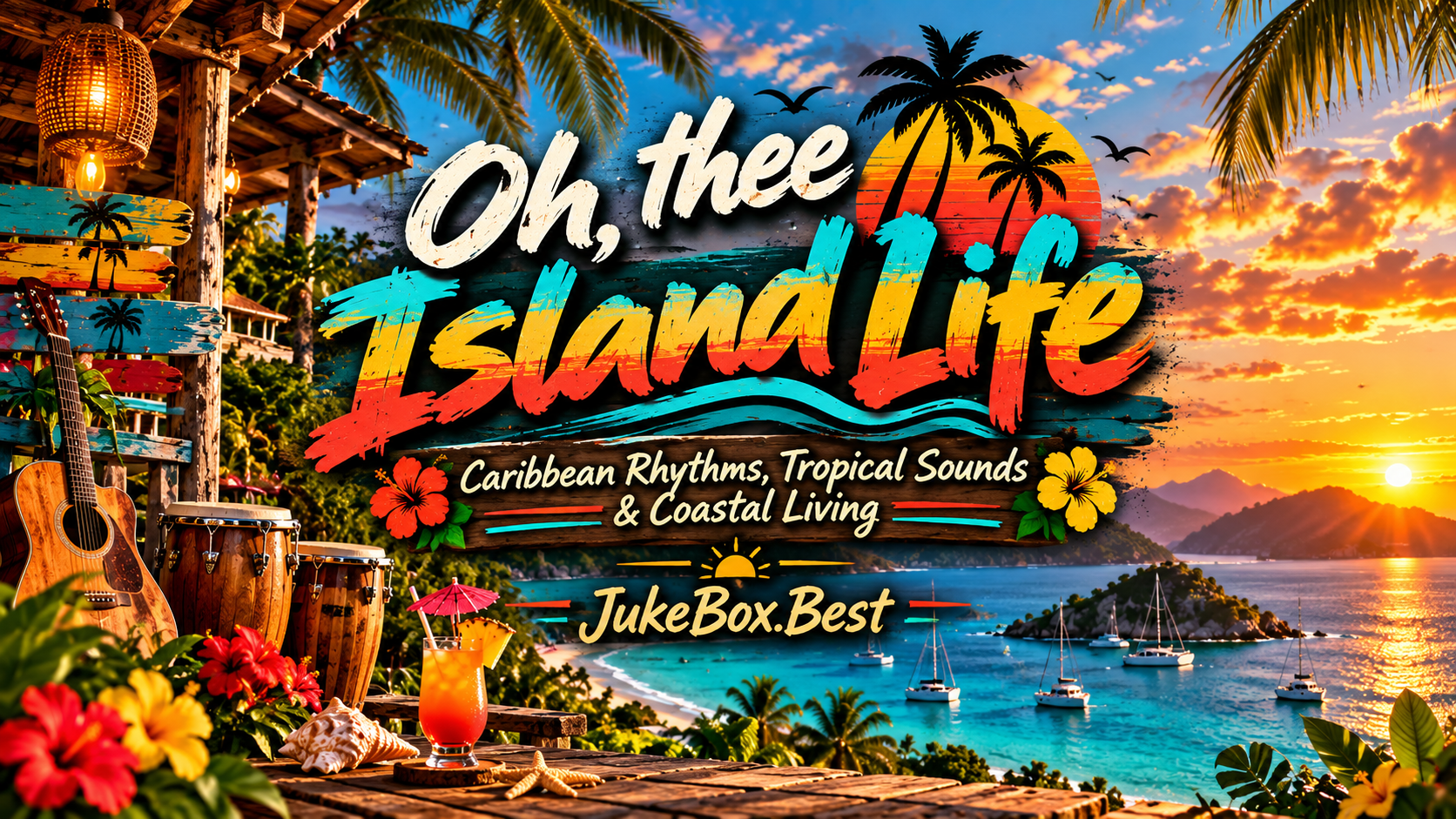
From the Caribbean to Latin America and every shoreline in between, this is nearly 60 hours of music shaped by islands, oceans, migration, dancing, sunshine and the unmistakable feeling of life lived near the water.
That's the question behind this playlist—and there isn't just one answer.
An island doesn't have a single rhythm.
Across the Caribbean and the tropical Americas, centuries of migration, trade, colonization, African traditions, European instruments, Indigenous cultures and local innovation created an extraordinary musical crossroads.
Calypso can sit beside reggae. Jamaican music can meet Colombian tropical orchestras. Brazilian rhythm can arrive beside Caribbean dance music. Old recordings can suddenly give way to modern reggae rock or a song about escaping somewhere warmer.
Oh, thee Island Life isn't an attempt to force all of that music into one genre.
It's about what happens when all of those sounds share the same horizon.
“The island isn't one genre. It's a place where rhythms meet.”
The playlist moves through a musical geography much broader than reggae alone.
Ska, rocksteady, reggae, dub and dancehall turned a small Caribbean island into one of the world's most influential musical centers.
Calypso, soca, Creole traditions and generations of local dance music give the wider Caribbean its own enormous musical vocabulary.
Colombia and the wider Latin world bring brass, percussion, orchestras and tropical dance traditions into the journey.
Samba, bossa nova and Brazilian popular music add another completely different rhythmic language shaped by Atlantic culture and tropical geography.
American musicians turned the dream of the islands into songs about beaches, boats, escape, travel and the freedom associated with life near the water.
Contemporary artists continue blending reggae, rock, acoustic music, pop and tropical influences into new interpretations of island and coastal life.
Harry Belafonte became one of the most recognizable voices associated with Caribbean music for American audiences, bringing songs such as “Banana Boat (Day-O)”, “Jump in the Line” and “Matilda” into popular culture.
Those recordings occupy a natural place in this collection because they represent one of the major ways generations outside the Caribbean first encountered island music.
From there, the story becomes much larger.
African, European, Indigenous and regional traditions developed across the Caribbean long before modern popular music categories existed.
Rhythm, wit and storytelling helped carry Caribbean music to international audiences and into mainstream popular culture.
Across Latin America, tropical orchestras developed rich regional traditions built for dancing, celebration and unmistakable rhythmic movement.
Reggae emerged from Jamaica and became one of the most internationally recognizable musical traditions ever created in the Caribbean.
Artists increasingly wrote about beaches, boats, bars, tropical destinations and leaving ordinary life behind.
Reggae rock, tropical pop, acoustic coastal music and global crossover sounds keep expanding the definition of what island music can become.
The collection works because it isn't locked inside a single genre.
Caribbean rhythm, storytelling and personality with deep roots and an enormous international cultural legacy.
Jamaican bass, drums and offbeat rhythm—from foundational recordings through the generations that followed.
Colombian and Latin American rhythms bring horns, percussion, orchestras and dance floors into the mix.
Samba, bossa nova and Brazilian popular traditions create a completely different interpretation of tropical rhythm.
Guitars, beaches, boats and escape—the modern coastal soundtrack shaped by musicians looking toward the islands.
Contemporary reggae, acoustic music and cross-cultural sounds keep moving island music into new territory.
Legendary Caribbean artists, Latin American musicians, reggae generations and modern coastal performers all share space in the collection.
Island culture doesn't stop where one language or national border begins.
The playlist reaches into Colombian tropical music, Cuban traditions, Haitian and Creole recordings, Brazilian sounds and other corners of the Caribbean and Latin world.
That's important to the identity of Oh, thee Island Life.
The Caribbean has always been a crossroads. Music traveled with people, records, radio, ships and migration. Instruments crossed borders. Rhythms were borrowed, changed and returned in new forms.
The ocean wasn't only a boundary.
It was a highway.
Not every song about island life was recorded on an island. It doesn't have to be.
Island culture became part geography and part imagination: warm water, open skies, boats, beaches, rum bars, fishing, dancing, hammocks, road trips and the possibility of simply disappearing for a while.
That idea became its own musical tradition.
Artists far beyond the Caribbean began writing songs that borrowed the atmosphere without necessarily borrowing one specific Caribbean genre.
The beach, the boat, the bar and the dream of getting away became more than scenery. They became characters in the music.
That coastal tradition eventually grew well beyond any single artist, influencing generations of musicians whose music sits somewhere between country, rock, folk, reggae and tropical escape.
In Oh, thee Island Life, that branch can live naturally beside Caribbean music because both speak to the relationship between people, place and water—even when they arrive there by completely different musical roads.
The playlists cross paths, but they aren't telling the same story.
Reggae Islands, Mon begins with reggae and asks how that Jamaican musical language traveled around the world.
Oh, thee Island Life begins with the islands themselves and asks a much broader question:
What does island life sound like?
Sometimes the answer is Bob Marley.
Sometimes it's Harry Belafonte.
Sometimes it's a Colombian orchestra, a Brazilian rhythm, an old Caribbean recording, a modern reggae-rock band or somebody with a guitar dreaming about a boat.
That's why both collections can share important songs while still creating completely different listening experiences.
This isn't background music assembled from twenty predictable beach songs.
It's a deep journey through the music people created on islands, carried away from islands, brought back to islands and imagined while dreaming about islands.
You'll move between generations, countries, languages and genres.
A familiar song may be followed by something recorded decades earlier in another country.
Reggae can lead into calypso. Calypso can give way to tropical Latin. An old Caribbean recording can eventually land beside a twenty-first-century coastal band.
That's the point.
Find the water. Press play. Welcome to the island life.
JukeBox.Best isn't one playlist. It's a collection of deeply curated playlists encompassing thousands of songs and artists. Discover your mood right here.